Tourism Revival in J&K Requires Joint Efforts: CM Abdullah
Chief Minister Omar Abdullah emphasizes the need for collaboration among tourism stakeholders to revive Jammu and Kashmir’s tourism sector during a meeting in Gulmarg.
 Admin
0 comments
Admin
0 comments
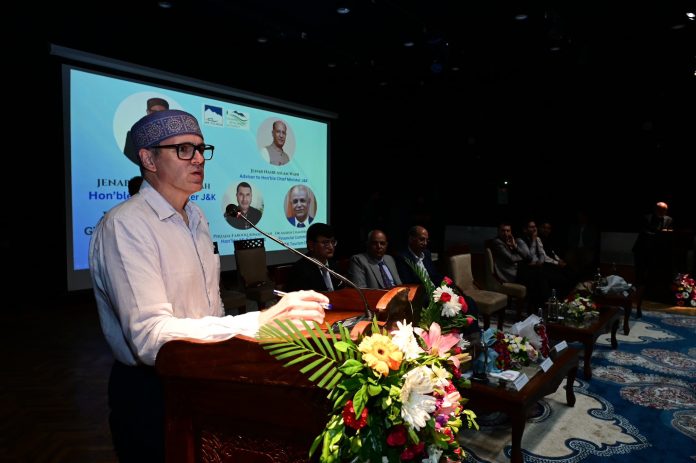
Gulmarg, Sep 18: In a recent closed-door meeting, Jammu and Kashmir’s Chief Minister, Omar Abdullah, highlighted the urgent need for collaboration among tourism stakeholders to revitalize the state’s tourism economy. Abdullah criticized the industry’s lack of support amid mounting political scrutiny, stressing the importance of unified efforts to restore tourism’s vibrancy.
The gathering took place at the newly inaugurated Gulmarg Convention Centre, where Abdullah voiced his frustration over stakeholders’ silence in the face of political attacks against his government’s tourism policies. “We cannot expect the tourism sector to flourish without collective action,” he stated, calling for a more active role from travel agents and other industry players.
The Importance of Joint Efforts in Tourism
Abdullah, who also oversees the tourism portfolio, pointed out that his administration has initiated several positive measures to promote tourism. These include a cycling festival in Pahalgam and a significant promotional campaign following the tragic April 22 terror attack, which resulted in the deaths of 26 tourists. However, he expressed disappointment that these efforts were not met with advocacy from the stakeholders who should have defended them against criticism.
“Our tourism sector is crucial for our economy, and we need all hands on deck to promote our beautiful region,” he emphasized. He further asserted that the success of tourism initiatives relies heavily on a collaborative environment where both public and private entities contribute actively.
Concerns Over Lease Agreements
During the meeting, the Chief Minister addressed the future of lease agreements for hotels across major tourist destinations such as Jammu, Katra, Pahalgam, Sonamarg, Srinagar, and Gulmarg. He warned that these agreements would soon be reviewed, a move that could significantly impact the local hospitality sector.
Abdullah also brought attention to the “selective leakage” of official orders to the media, suggesting that this undermines the integrity of his initiatives. He criticized the narrative that has emerged around a proposed tourism promotion visit to Paris, clarifying that neither he nor his advisor, Nasir Aslam Wani, will attend the trip; instead, state representation will be provided by officials and travel associations.
Experts Weigh In on Tourism Strategies
Industry experts agree that cohesive strategies are necessary for Kashmir’s tourism revival. According to recent statistics, the region’s tourist arrivals have dropped by over 30% in the past five years, largely influenced by ongoing political tensions and security concerns.
“The path to recovery is not just about attracting tourists; it’s about rebuilding trust and engagement within the tourism community itself,” says tourism analyst, Priya Sharma. “When government and private entities work collaboratively, it creates a more welcoming atmosphere for visitors.”
The Road Ahead for Jammu and Kashmir Tourism
As autumn approaches and travel plans are being made, Abdullah reinforced his commitment to revitalizing Jammu and Kashmir’s tourism sector. He urged stakeholders to step up, actively partake in promotional initiatives, and serve as ambassadors for the region.
“Sustained success in tourism requires teamwork—between travel agents, hoteliers, and the government,” Abdullah concluded. If this collaboration is built, the potential for Jammu and Kashmir’s tourism sector could be vast, restoring its reputation as a premier travel destination.