Supreme Court Issues Notice for CBI Probe into JPSC Exam Irregularities
The Supreme Court has directed the Centre and Jharkhand government to respond to a plea for a CBI investigation into alleged irregularities in the JPSC exam.
 Admin
0 comments
Admin
0 comments
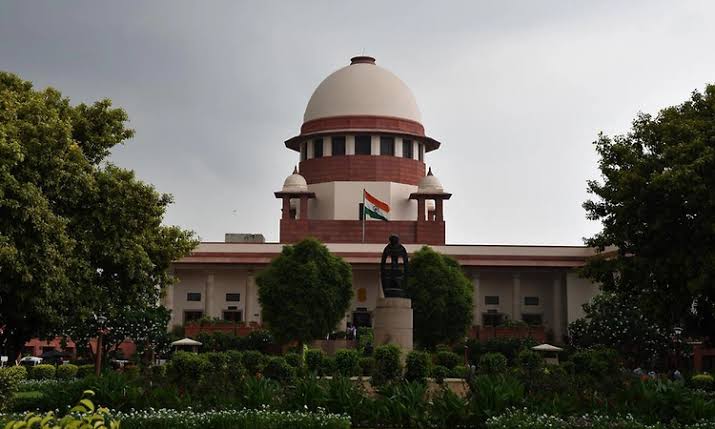
The Supreme Court of India issued notices to the Centre and the Jharkhand government on Monday regarding a plea that calls for an independent, time-bound investigation by the CBI into alleged irregularities in the Jharkhand Combined Civil Services Preliminary Examination.
This pivotal decision came from a bench comprising Chief Justice Surya Kant and Justices Joymalya Bagchi and V Mohana, who have sought responses from the Union of India, the Jharkhand government, and the Jharkhand Public Service Commission, among others.
Senior advocate Manan Kumar Mishra represents the petitioner, activist Harisharan Devgan, who seeks a CBI inquiry or an independent investigation by a former judge of the Supreme Court.
The top court is engaging with a petition filed by Devgan, represented by advocate Satyam Singh Rajput, asking for urgent intervention due to serious concerns surrounding the integrity, fairness, transparency, and credibility of the Jharkhand Combined Civil Services Preliminary Competitive Examination.
The examiner, Jharkhand Public Service Commission, conducted the examination in connection with Advertisement No. 01/2026 on April 19, 2026. The petition emphasizes the need for the apex court’s intervention to address potential malpractice.
Devgan notes that the petition, filed under Article 32 of the Constitution of India, reflects public interest. He argues that the ongoing situation casts doubt on the legitimacy of the examination process.
The Jharkhand Combined Civil Services Preliminary Examination is critical for thousands of candidates aspiring to serve in various administrative capacities in the state. Allegations of irregularities could have far-reaching implications on public trust and the governance structure.
In light of this situation, the Supreme Court’s decision has garnered significant attention, prompting discourse on the vital need for fair examination practices. The coming responses from the government and the commission will be pivotal in determining the course of this investigation.
As the court yearns to uphold justice and transparency, the outcome of this legal battle may set precedents for similar scrutiny of examinations in India and reinforce public faith in the civil services recruitment processes.