Medical Interns in J&K Launch 48-Hour Hunger Strike
Medical interns across Jammu and Kashmir initiate a 48-hour hunger strike as negotiations with the government stall regarding their monthly stipend increase.
 Admin
0 comments
Admin
0 comments
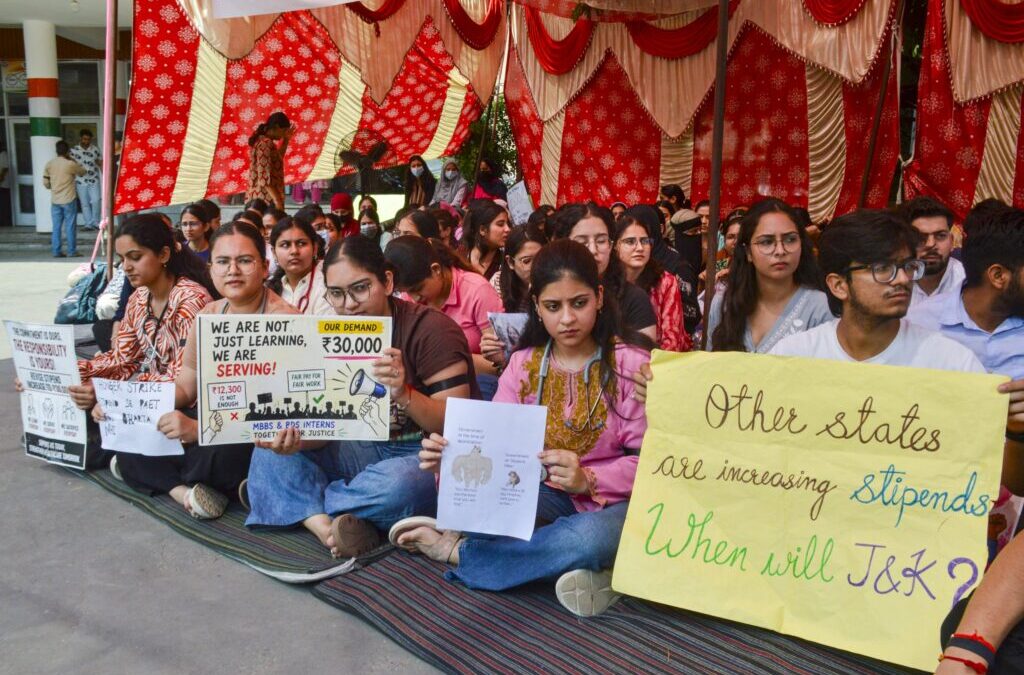
Medical interns from ten Government Medical Colleges and two Dental Colleges in Jammu and Kashmir initiated a 48-hour hunger strike on Monday. This action follows unsuccessful negotiations with the state government, designed to resolve their ongoing demands for a substantial increase in their monthly stipend.
Dr. Faraz, a prominent medical intern involved in the protest, highlighted the urgency of their situation. “Our strike is indefinite. It will not stop until we receive an official order,” he stated. He emphasized that it has been over a week without resolution. “If the government takes an issue seriously, it doesn’t take this long to issue an order,” he asserted, reflecting the frustration of his peers.
The interns expressed disappointment over the government’s delay, arguing that they have waited long enough for their requests to be addressed. On the situation, Dr. Faraz pointed out, “The recommendation was made in 2023. Eight days have passed since we began our strike, and there is still no order.” Their patience wanes as they face repeated verbal reassurances that fail to materialize into action.
Dr. Faraz further elaborated, “The college administration attempts to intimidate and threaten us. It is unacceptable. We are protesting for our legitimate rights.” He called for solidarity among the interns and made it clear that fear tactics would not deter them from their cause.
Another intern, Dr. Musharaf, remarked on the ongoing dialogues with the government. While he acknowledged positive developments in conversations, he clarified that no actionable solution has yet emerged. “Our subsequent dialogue will continue moving forward,” he reassured, asserting that while the current strike signals a serious escalation, they remain open to negotiation.
The hunger strike aims to maintain pressure on the government, prompting a sense of urgency for officials to respond to their demands. The interns have taken a step that underscores their commitment to their cause. “We will plan our course of action as things progress,” Dr. Musharaf noted, indicating that further actions might follow if the situation does not improve.
Supporters of the interns gathered to voice their solidarity, emphasizing the importance of fair compensation for their hard work. As essential service providers, they argue that a stipend adjustment is not only justified but essential for sustaining their future in healthcare.
The protests in Jammu and Kashmir reflect broader issues within the Indian healthcare system, where medical professionals often lack adequate support and compensation. The interns strive to raise awareness about their plight, aiming to catalyze change that extends beyond their immediate circumstances.
Amid rising tensions, the interns remain hopeful that the government will finally heed their calls for action, ending their months-long saga of uncertainty. It remains crucial for officials to engage meaningfully with these young professionals, as their demands carry significant weight.